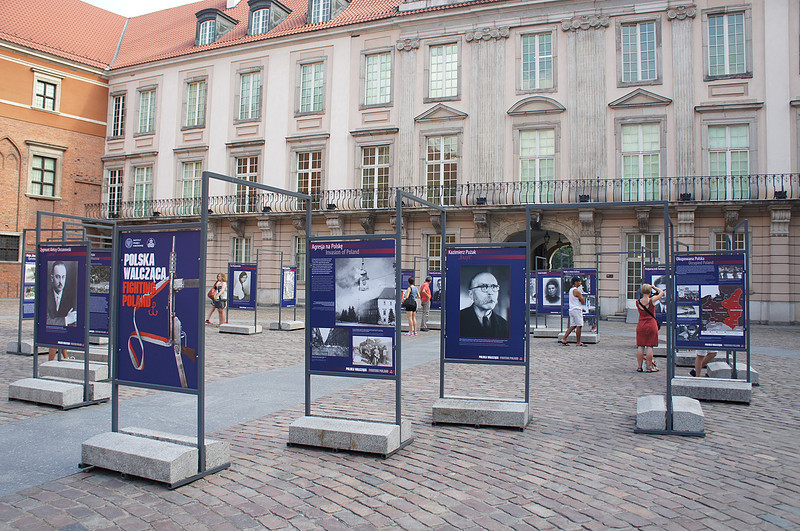
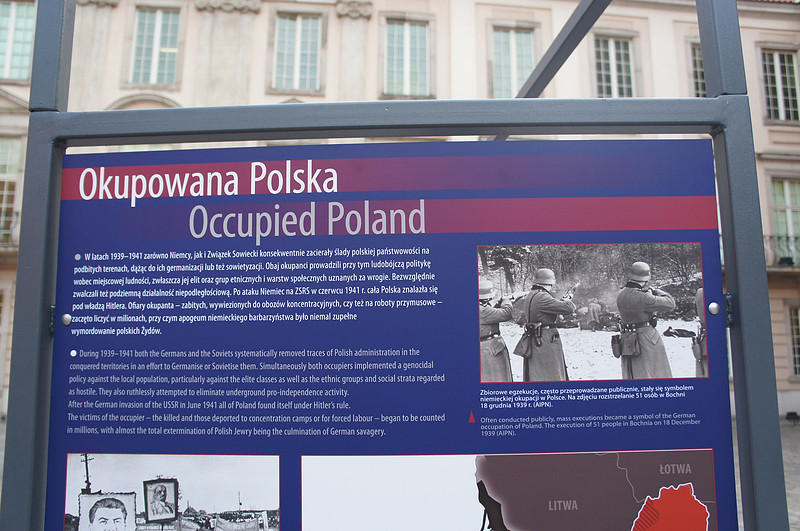
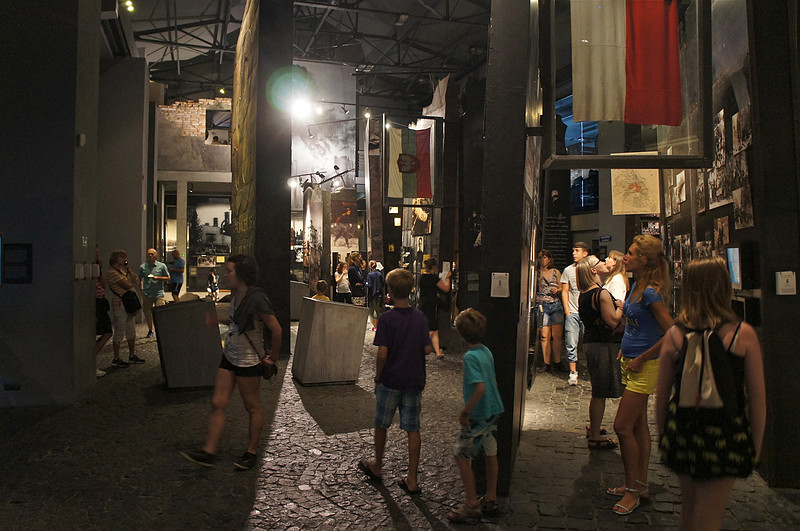
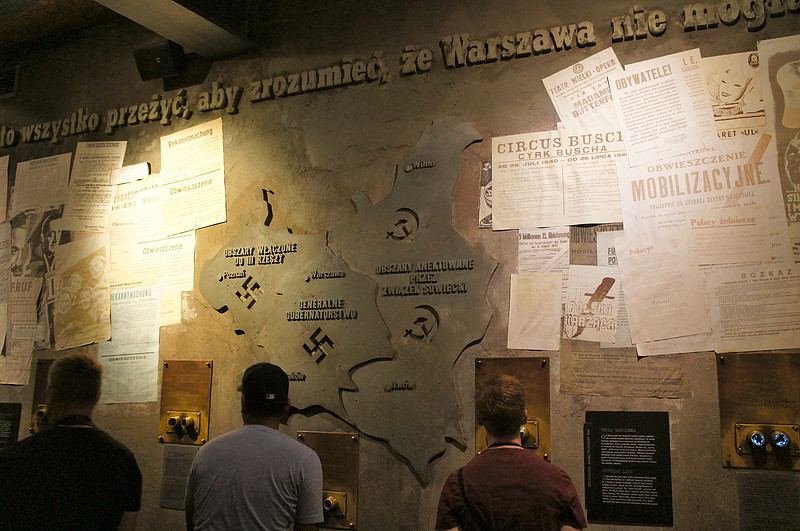
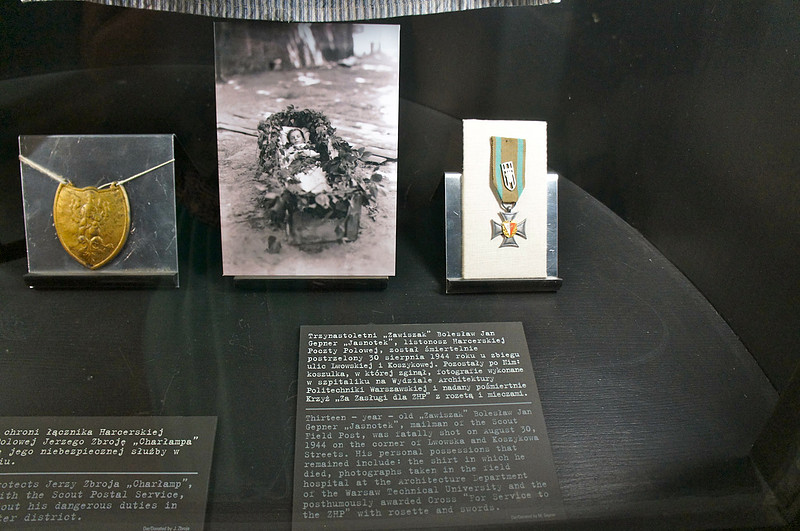
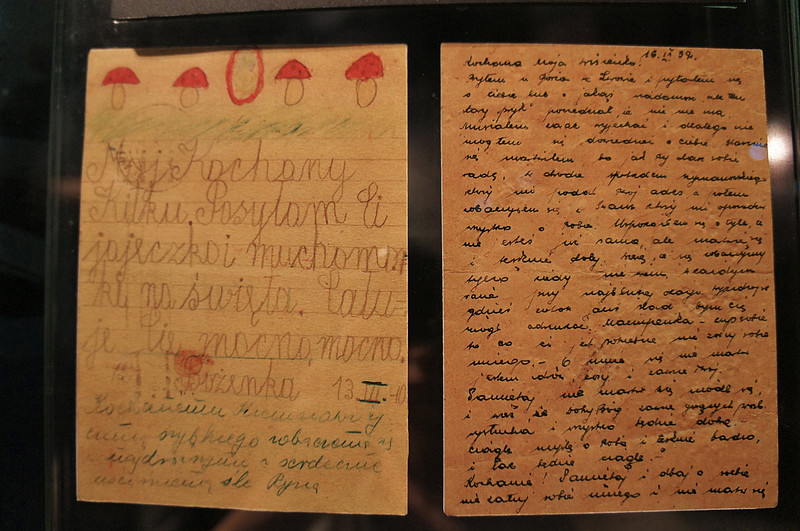
Warsaw UprisingWe arrived in Warsaw just two days after the 70th Anniversary of the Warsaw Uprising (Powstanie Warszawskie). The week before August 1st, TV stations were showing war themed programs and films. I actually watched a documentary recorded in early 2000s in which survivors of the uprising and WWII told their heartbreaking stories filled with terror and fear but also with hope and courage. It is unimaginable for the vast majority of us nowadays to understand the terror of WWII; hiding in underground sewer tunnels from the Nazis; watching their family and friends die of hunger, sickness and wounds; seeing them get shot or even explode in front of them. The Nazis made people's lives seem so unimportant, so disposable. It makes me wonder how a nation could turn so evil? What kind of a person follows orders of an evil tyrant? What does it take to become so devoid of human feelings and of what's right and wrong and decide to kill MILLIONS? MILLIONS. Warsaw Uprising was a 63 days resistance operation by the Poles to liberate Warsaw from Nazi/German occupation and regain its independence and borders. It began on August 1, 1944, after 5 years of occupation during WWII when people saw no end in sight and decided it might be better to die in a fight for independence than live in daily terror and fear of execution. The Polish resistance army was ill equipped for the fight as only 1 in 10 had any weapons. The unarmed ones hoped to seize weapons from the fallen enemy, however often times they would inherit it from their own fallen colleagues. For this reason, the uprising is still a fairly controversial subject in Poland as many believe that with such limited weapons it was bound to fail and that it only angered Germans causing hundreds of thousands in deaths. On average, each day during the uprising, about 2,400 Poles died. That's almost the 9/11 total casualty per day (thanks Damian for this analogy). It became impossible to bury so many people and there was no time for it. The entire city became a graveyard. "There was no difficulty in finding Warsaw. It was visible from 100 kilometers away. The city was in flames but with so many huge fires burning, it was almost impossible to pick up the target marker flares." – William Fairly, a South African pilot, from an interview in 1982[97] During the uprising, Poland hoped for some help from Russia as they also fought Germany. However, it became clear that the Soviets were not interested in helping. Despite Winston Churchill's pleas, Stalin did not send any help and also did not allow for British planes carrying aid (weapons, ammunition and food) to land on Soviet territory. Therefore, most aid packages dropped for Poland ended up in Nazi's hands. During the entire uprising, Soviet's Red Army was stationed outside of Warsaw but did nothing to help. Even though Poland and Russia shared the same enemy their war goals were different. Poland wanted independence, while Russia wanted to expand its empire by seizing more of Polish land from the German's. The uprising resulted in deaths of 18,000 members of the Polish resistance and 150,000 civilians, as well as complete destruction of Warsaw. Germans spent 3 weeks making sure the city was bombed and burnt to the ground. Whoever was left was taken to German work camps where death was almost inevitable. On the other side only 8,000 germans were killed and 9,000 wounded. The destruction of Warsaw was planned by Hitler even before the war started; there were architectural plans for converting the Polish capital into a German city. But before that could be done, everything that was Polish had to be destroyed. To get the job done, after the uprising, the Germans sent their engineers to burn and demolish the remaining buildings, paying special attention to historical sites and places of value or interest to the Poles. By January 1945, 85% of buildings were destroyed. People lost their homes and possessions. The estimated value of losses is about $55 billion. But it's not really the money that's important here... For more photos of Warsaw & Warsaw Uprising Museum, check out the Gallery page.
For more photos of Warsaw & Warsaw Uprising Museum, check out the Gallery page. 
Comments
No comments posted.
Loading...
|